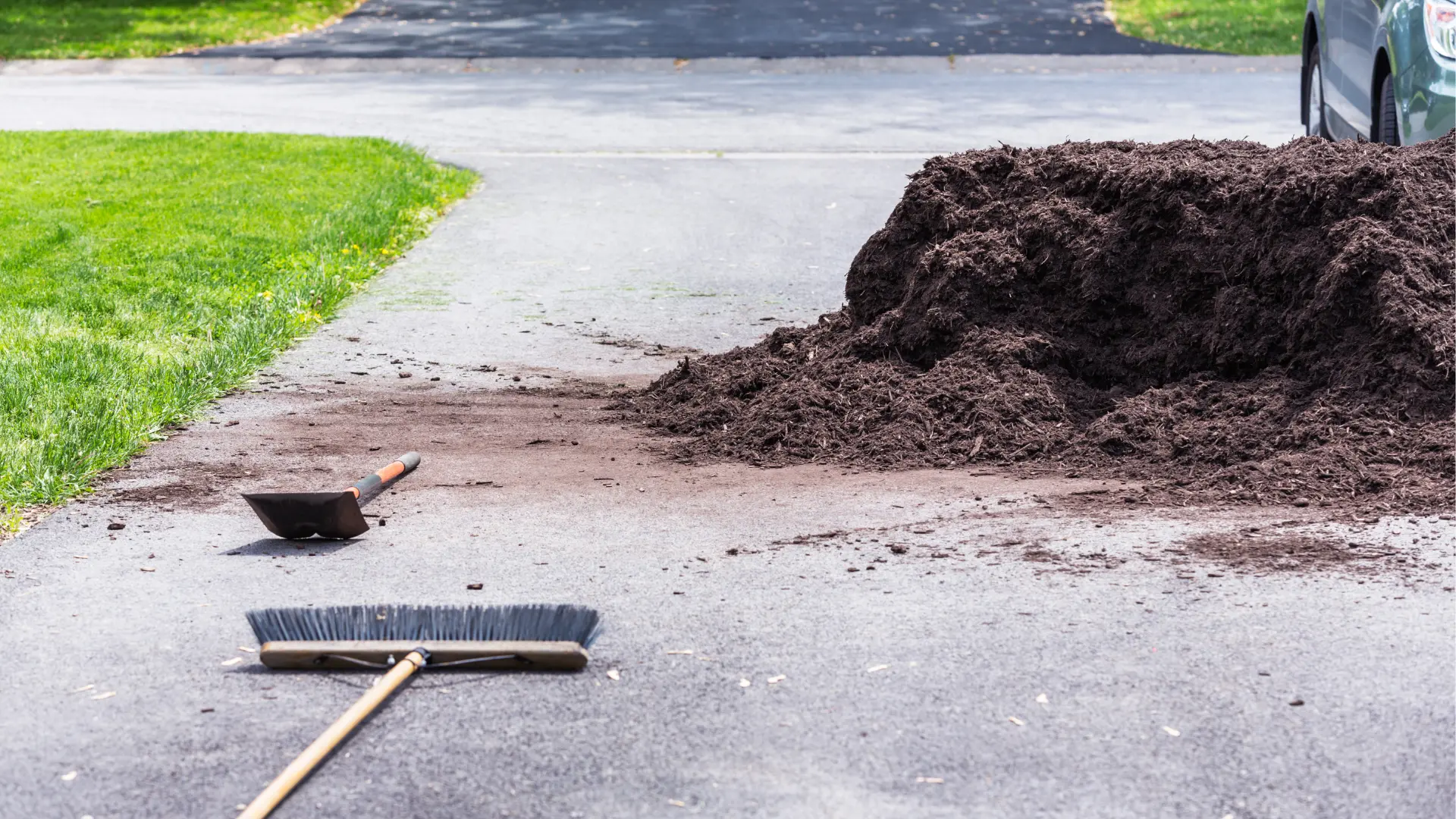
First: what are you buying-bulk or bagged?
Almost every delivery vs pickup decision starts here.
Bagged mulch
- Sold by the bag (often 2 cu ft bags in the U.S.)
- Easy pickup in a car or SUV
- Delivery usually means big-box delivery (fees vary) or local garden center delivery
Bagged mulch works well for small projects, touch-ups, and weekend garden work.
Bulk mulch (by the yard or ton)
- Sold loose, usually by the cubic yard (common) or by weight (less common for mulch)
- Pickup requires a truck/trailer
- Delivery often comes by dump truck and can drop in driveway or job site
Bulk mulch is what most people mean when they're doing a real "mulch project."
The delivery vs pickup question matters most for bulk mulch.
Mulch delivery costs explained (what you're usually paying for)
Delivery fees aren't random. They typically depend on:
1) Distance / delivery zone
Many suppliers have zones:
- "Within X miles" base fee
- Higher fee beyond the zone
2) Minimum order size
Bulk suppliers often have minimums like:
- 2 yards
- 3 yards
- 5 yards
If you don't meet the minimum, they either won't deliver or the delivery fee becomes painful.
3) Drop type and access
Some delivery types require more time or care:
- Driveway drop (standard)
- Job site drop
- Restricted access areas
- "Spread" service (rare, but some suppliers offer install/spreading)
4) Same-day delivery
Same-day delivery often means:
- Higher fee
- Limited slots
- Earlier cutoff time
Sometimes suppliers say "same-day delivery available," but it depends on workload and route planning.
5) Material volume
Some suppliers price delivery differently by load size. A full load is more economical than multiple small loads.
Bottom line: Delivery is usually a mix of distance + logistics + minimum order, not just a flat number.
Mulch pickup logistics (what it really costs)
Pickup looks cheap because you're not paying a delivery fee. But you are paying in other ways.
1) Vehicle requirements
To pick up bulk mulch you need:
- A pickup truck with an open bed, or
- A trailer (often better)
If you don't already have one, pickup gets expensive fast (rental + time).
2) How much mulch fits in your truck?
This is where people under-estimate.
A very rough sense:
- 1 cubic yard is a lot of volume
- Many standard pickup beds can handle around 1–2 yards by volume (depending on bed size), but weight and load height matter
- Trailers often make bulk pickup much easier and safer
Also: wet mulch is heavier and can overload a vehicle faster than expected.
3) Loading and unloading time
Pickup includes:
- Driving to the yard
- Waiting in line
- Loading time (sometimes they load you, sometimes you shovel)
- Unloading at home (shovel + wheelbarrow work)
This is real labor. If you value your weekend time, it has a cost.
4) Hidden costs
Pickup can include:
- Fuel
- Wear and tear on vehicle/trailer
- Rental fees (truck rental / trailer rental)
- Tarp, straps, cleanup
- Landfill fees if you spill or need to dispose of old material (rare, but it happens)
Pickup is only "cheap" if you already have the gear and the trip is short.
When delivery saves money (yes, this happens)
Delivery can be cheaper overall when your pickup would require multiple trips or rentals.
Scenario A: You need multiple yards
If you need 3–10 yards:
- Pickup might take multiple trips unless you have a trailer or large truck.
- Multiple trips = fuel + time + hassle.
A single delivery can often beat the combined cost of:
- Multiple trips
- Your time
- Your vehicle wear
- The risk of overloading and dealing with mess
Scenario B: You'd need to rent a truck or trailer
If you don't own a truck:
- Renting one often costs more than a simple delivery fee once you factor in time and mileage.
Even if delivery costs more by pure dollars, the time savings can make it "cheaper" from a real life perspective.
Scenario C: You need bulk + convenience for a short deadline
If you're trying to finish the project in one day:
- Delivery reduces uncertainty
- Avoids "I ran out and need another trip"
- Keeps you working instead of driving
When pickup is cheaper (and smart)
Pickup wins when the project is small and you're equipped.
Scenario A: Small volume
If you only need:
- A few bags, or
- Under ~1 yard of bulk (depending on your vehicle)
then pickup is usually cheaper.
Scenario B: You have the right vehicle and it's close
If you already own:
- A pickup or trailer,
and the supplier is nearby, pickup can be very cost-effective.
Scenario C: You want control over placement
Delivery usually drops mulch in one spot. If that spot is inconvenient, you're wheelbarrowing anyway.
Pickup doesn't fix that, but people sometimes prefer pickup because:
- They can stage loads
- They can do partial loads across multiple weekends
Same-day delivery: what changes?
Same-day delivery is mostly about project timing.
Same-day delivery is great if:
- You started a project and ran short
- Weather is coming
- You have help scheduled
- You're a contractor needing material on-site
Same-day delivery costs more because:
- It disrupts routing
- Supplier has to fit you into a schedule
- It's often limited to certain products/volumes
If you can plan ahead by even 1–2 days, you usually get:
- Better availability
- Lower delivery fees
- Fewer surprises
But if the job needs to finish today, same-day delivery can easily be worth paying extra.
Homeowner vs contractor scenarios (how each typically decides)
Homeowners
Most homeowners care about:
- Convenience
- Not making a mess
- Finishing in one weekend
- Not overbuying
Typical homeowner choices:
- Bagged mulch pickup for small beds
- Bulk mulch delivery for full yard refresh
- Pickup only if they already own a truck/trailer and want to save money
Contractors / landscapers
Contractors care about:
- Time on job site
- Predictable supply
- Consistent quality
- Load size efficiency
Typical contractor choices:
- Bulk delivery to job site (often preferred)
- Pickup when:
- Supplier is very close
- They're already running material runs
- Delivery windows don't match schedule
For contractors, time costs money. Delivery becomes a default choice more often.
How to decide quickly: a simple decision framework
Answer these questions:
1) How much mulch do you need?
- Small (a few bags) → pickup usually best
- Medium/large (2+ yards) → delivery often best
2) Do you have a truck or trailer?
- Yes → pickup becomes viable
- No → delivery likely wins unless bagged
3) How far is the supplier?
- 10 minutes away → pickup more attractive
- 45 minutes away → delivery starts to win fast
4) Do you value finishing fast?
- Yes → delivery (or same-day delivery)
- No → pickup can be fine over multiple trips/weekends
5) Where do you want the mulch dropped?
If your driveway drop point is fine, delivery is easy. If you have tight access or HOA issues, pickup might be simpler (or you'll need to coordinate drop location carefully).
Practical questions to ask suppliers
If you're comparing mulch delivery near me options, ask:
- What's your delivery fee to my address?
- What's the minimum order for delivery?
- Do you deliver same-day or next-day? Any cutoff time?
- Do you dump in driveway, curbside, or wherever accessible?
- Is there an extra fee for restricted access?
- Is mulch sold by the yard or by weight?
If you're planning mulch pickup near me, ask:
- Can I pick up bulk mulch today?
- Do you load it with a machine or do I shovel?
- Do I need a trailer, or can a pickup handle it?
- Do you recommend tarping?
- What are your hours and busiest times?
These questions prevent wasted trips and surprise fees.
How MulchMap helps (delivery vs pickup filters)
The biggest pain is that many supplier listings don't clearly say:
- Delivery yes/no
- Pickup yes/no
- Bulk vs bagged
- Minimum order requirements
That's why comparing suppliers feels like calling around blindly.
MulchMap helps by organizing suppliers by location and highlighting logistics signals pulled from listings and reviews. You can:
- Filter for delivery
- Filter for pickup
- Compare bulk vs bagged availability
- Shortlist suppliers that match your project size and timeline
Final takeaway
Mulch delivery vs pickup comes down to project size and whether you're equipped.
- Pickup is usually cheaper for small projects, especially bagged mulch.
- Delivery often wins for 2+ yards, especially if pickup would require rentals or multiple trips.
- Same-day delivery can be worth it when timing matters, but planning ahead usually saves money.
If you want to make this decision fast, don't guess-compare local suppliers' delivery and pickup options in one place.