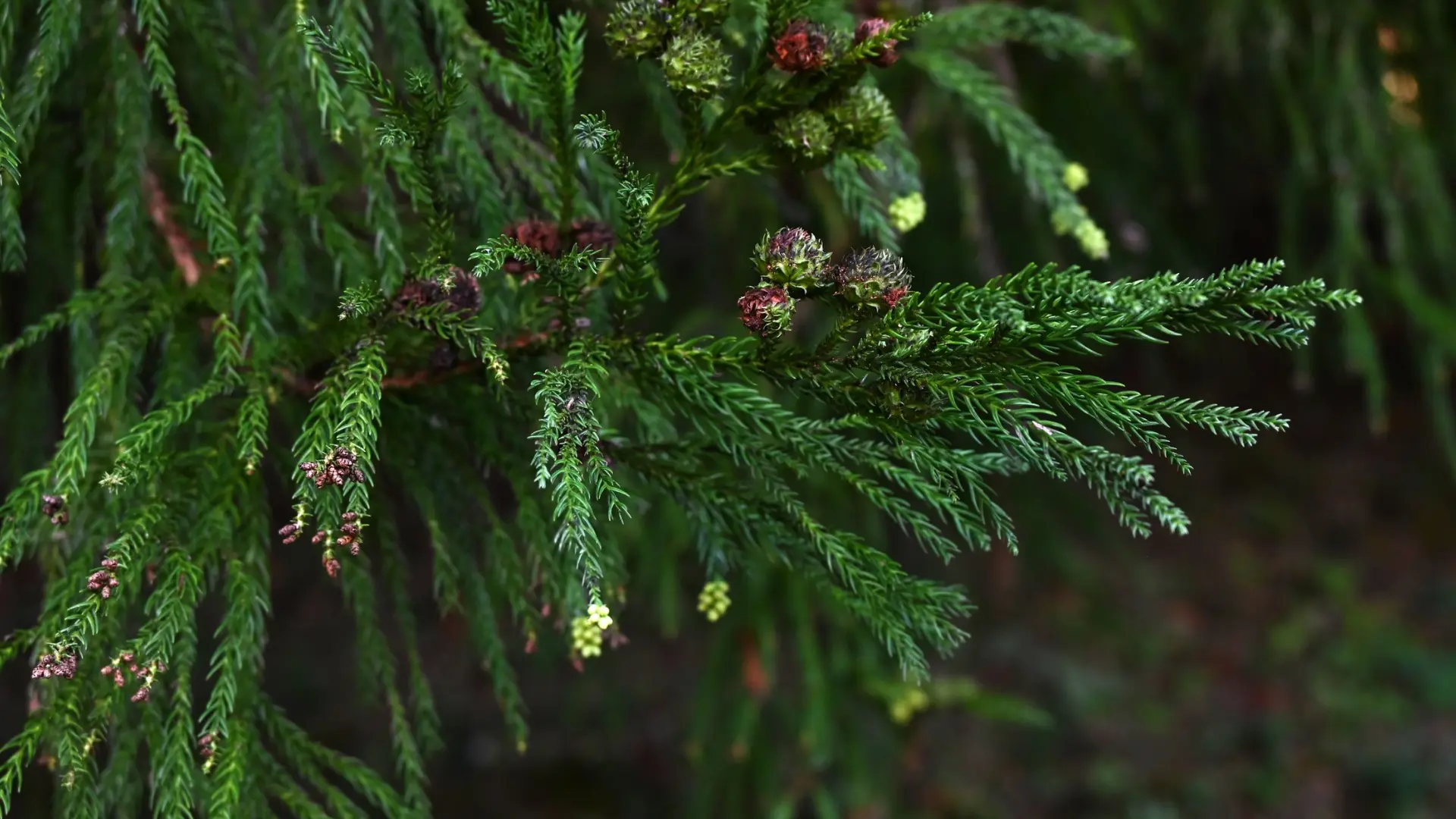
What is cedar mulch anyway?
Cedar mulch is exactly what it sounds like - mulch made from cedar wood, either shredded or chipped. Most people use it in landscape beds around their house, shrubs, and anywhere they want things to look nice.
You'll usually find it sold as:
- Shredded cedar mulch - fine texture, good for beds, clean look
- Cedar chips - chunkier, works for paths or low-maintenance spots
Sometimes it gets fancy names like:
- "Cedar bark mulch"
- "Cedar nuggets" - bigger bark-like chunks
- "Natural cedar mulch" - meaning they didn't dye it
Cedar is pretty much always natural (not dyed), which is part of why people like it. Looks good without needing artificial color.
Cedar mulch benefits (what you're actually buying)
1) It smells really good (when it's fresh)
Cedar mulch has that distinctive cedar scent, especially right after you spread it. A lot of homeowners love this because it makes the yard smell freshly landscaped.
Fair warning: the smell fades over a few weeks, but you'll notice it pretty clearly at first.
2) Natural bug resistance (real, but not magic)
Cedar has a reputation for keeping bugs away. There's some truth to it - cedar contains compounds that bugs don't like.
The honest version:
- Cedar can discourage some insects compared to regular wood mulch
- It's not a replacement for actual pest control
- How well it works depends on your climate, how wet it gets, and how old the mulch is
Treat it as a nice bonus, not a bug-proof force field.
Where it helps most:
- Beds right next to your foundation
- Spots where you see ants or other bugs regularly
- Around patios and porches where you don't want insects crawling around
3) Looks premium and ages well
Cedar has a cleaner natural color and better texture than basic shredded hardwood. Looks nicer from day one.
Even better, it fades in a way that still looks good. When it lightens up over time, it doesn't turn into that grayish, sad-looking mulch you see in some yards.
If you care about curb appeal, cedar is an easy upgrade without getting into expensive specialty stuff.
4) Lasts longer (usually)
Cedar breaks down slower than softer mixed mulches, especially if you get the chunkier chips or nuggets.
What that means for you:
- You top it off less often
- Beds keep their shape longer
- Fewer trips to buy more mulch
Climate matters though:
- Wet climates - any wood mulch breaks down faster
- Hot sunny climates - it dries out and lightens quicker
Still, cedar generally outlasts cheap shredded stuff.
Cedar mulch downsides (what you're paying for)
1) It costs more
Cedar mulch costs more than:
- Regular hardwood mulch
- Basic wood chips
- Most shredded bulk blends
You're paying for:
- A better wood source
- The premium branding
- Sometimes just lower supply in your area
It's not overpriced necessarily, but it's definitely not the cheapest option if you're covering a big area.
Large project? Cost adds up fast with cedar.
2) Availability can be inconsistent (depending on region)
In some regions, cedar is widely available. In others, it's less common and may only be found bagged at certain retailers or carried by specific landscape supply yards.
That's why search behavior looks like:
- "cedar mulch near me"
- "where to buy cedar mulch"
- "cedar mulch delivery near me"
A directory approach helps, because you can quickly see who mentions cedar explicitly and who doesn't.
3) Not always ideal for every garden type
Cedar is a natural mulch, but not everyone wants it in every garden.
For example:
- Some vegetable gardeners prefer straw, leaf mulch, or composted mulches because they want faster breakdown and easier soil integration.
- If you frequently replant and disturb soil, a premium decorative mulch can feel like wasted effort.
Cedar is usually best when you want stable, long-lasting bed coverage with minimal disturbance.
Smell & longevity: what to expect over time
Smell timeline
- Fresh install: strongest scent
- 2–4 weeks: noticeable but fading
- 1–3 months: often faint or only noticeable after rain
Longevity timeline (very general)
- Cedar shredded: typically holds up well, but will still break down over a season
- Cedar chips/nuggets: can last longer because they're larger pieces
- In high-rain areas: expect quicker breakdown
- In dry areas: expect slower breakdown (but more fading/lightening)
If your goal is "mulch it and forget it," cedar chips/nuggets often perform better than ultra-fine shredded mulch.
Cedar mulch cost comparison: bulk vs bagged
Cedar mulch pricing varies a lot by location, but the pattern is consistent:
Bagged cedar mulch
- Easiest to find in many areas
- Convenient for small projects
- Often the most expensive per unit volume
Bagged is great when you need:
- A few bags for a refresh
- Mulch you can transport in a car
- Easy DIY storage
Bulk cedar mulch (if available)
- Often cheaper per volume than bags
- Better for larger beds
- Sometimes available by the cubic yard
Bulk is best when you need:
- 2+ cubic yards
- Delivery to driveway/job site
- Consistent appearance across large areas
The catch: not every supplier carries cedar in bulk, even if they carry other mulches. So it's worth confirming cedar specifically.
When cedar mulch is worth it
Cedar is worth the premium when at least one of these is true:
1) You're mulching high-visibility areas
Front beds, entryways, foundation landscaping-places where curb appeal matters and you want beds to look "finished."
2) You want a natural mulch look without dye
If you prefer natural mulch (not dyed black/brown/red), cedar gives you a clean look with less "artificial" feeling.
3) You're mulching near living spaces
Patios, porches, seating areas-where smell and aesthetics are more noticeable, and where the "minor pest discouragement" benefit is most valuable.
4) You want longer-lasting, low-maintenance beds
If you don't want to refresh mulch constantly, cedar (especially chunkier forms) can reduce how often you need to top up.
5) You're okay paying more to avoid low-quality mulch issues
Some cheap mulches break down fast, wash away, look uneven, or contain mixed debris. Cedar is often purchased simply because it feels more dependable.
When cedar mulch is NOT worth it
Skip cedar when:
1) You're covering huge areas on a tight budget
If you're mulching large back beds, rural areas, or utility zones, bulk hardwood or chips are often the smarter economic choice.
2) You're doing temporary landscaping
If you're redoing beds, reshaping landscaping, or planning construction, it makes more sense to use cheaper mulch until the layout stabilizes.
3) You don't care about scent, aesthetics, or "premium feel"
If the goal is pure weed suppression and moisture retention, basic hardwood mulch does the job.
Choosing cedar mulch suppliers near you (what to ask)
When you contact a supplier, ask direct questions:
- Do you carry cedar mulch (shredded, chips, nuggets)?
- Is it sold bagged, bulk, or both?
- If bulk: is it measured by the yard and what's the minimum?
- Do you offer delivery, and what are the delivery fees?
- Is it 100% cedar, or a blend?
- Is the cedar mulch screened for consistency?
Suppliers vary widely on product naming, so "cedar" can mean different things. Clarifying saves you wasted trips.
How MulchMap helps with cedar mulch
The frustrating part of buying cedar is that a lot of places "sell mulch," but don't specify which types. Meanwhile, cedar buyers are often specifically searching:
- cedar mulch near me
- "where to buy cedar mulch"
- "cedar mulch delivery"
MulchMap is built for that exact gap: it surfaces suppliers and highlights details pulled from listings and customer reviews, so you can quickly find providers who actually mention cedar.
Use the Cedar Mulch filter, then narrow by:
- Bulk vs bagged
- Delivery vs pickup
- Highest-rated suppliers
Final takeaway
Cedar mulch is one of the best "premium but still practical" landscaping upgrades:
- Looks clean and natural
- Smells great when fresh
- Holds up well
- May offer mild pest discouragement benefits
But it costs more, and it's not necessary everywhere. Use cedar where aesthetics and longevity matter most-front beds, foundations, and living spaces-and use cheaper bulk mulch for large coverage areas.