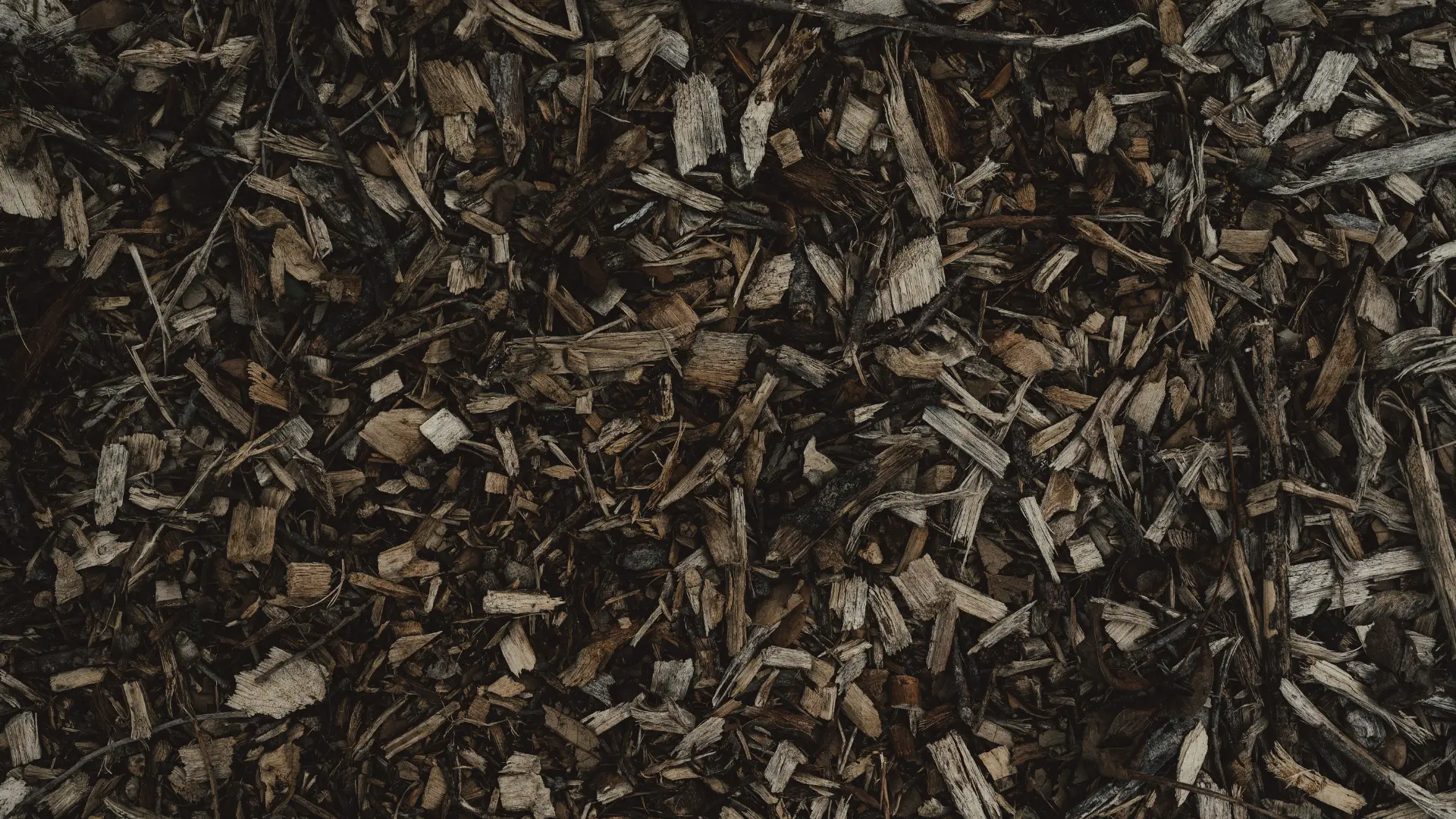
What "black" and "brown" mulch actually means
Brown mulch: natural or dyed
Brown mulch comes in two forms:
- Natural brown - actual bark, hardwood chips, cedar, pine bark, whatever color they naturally are
- Dyed brown - shredded wood that gets colored to look uniformly brown
Natural brown ranges from light tan to dark chocolate depending on what tree it came from and how old it is. Dyed brown looks more uniform and polished.
Black mulch: almost always dyed
Black mulch is basically always dyed. It's usually shredded wood (sometimes recycled) that gets dyed black for that clean, uniform look.
Simple breakdown:
- Brown mulch: could be natural or dyed
- Black mulch: definitely dyed
This doesn't make black automatically bad or brown automatically good. It just means the materials and processing are different.
How they actually look (and why people pick each one)
Black mulch: high contrast and modern
Black mulch makes a statement. It creates sharp contrast that makes green plants really pop. Works especially well with white flowers, light-colored stone, or modern clean-lined designs.
Where black mulch shines:
- Modern or minimalist yards
- Clean-edged front beds
- White or gray houses
- High-contrast plantings like ornamental grasses and hostas
Brown mulch: natural and blends in
Brown mulch looks organic. It matches soil tones, blends with wood fences, and fits basically any yard style without looking too bold or trendy.
Where brown mulch works best:
- Traditional landscaping
- Garden beds where you want a softer look
- Yards with lots of natural wood and stone
- Woodland-style or native plant beds
If your goal is "it should look like it belongs here," brown wins almost every time.
Dyed vs natural: what to know (without fear-mongering)
A lot of the "black vs brown" debate is really about dyed mulch vs natural mulch.
Natural mulches (often brown-ish by default)
Natural options include:
- Shredded hardwood mulch
- Bark mulch
- Cedar mulch
- Pine bark nuggets
- Wood chips (more "utility" than decorative)
Natural mulch color changes as it weathers-often turning grayish or fading toward a lighter brown.
Dyed mulches (black/brown/red)
Dyed mulches are typically made by coloring shredded wood fibers. The dye makes the mulch color uniform and often improves curb appeal immediately after install.
Important: dyes used for landscaping mulch are generally marketed as non-toxic and water-based (varies by supplier). Still, quality can differ by region and manufacturer, and it's always reasonable to ask the supplier what their dyed mulch is made from.
The practical reality:
- Dyed mulch tends to look better longer
- Natural mulch feels "more organic" and is often preferred by gardeners focused on "natural inputs"
- Both can be used safely in typical landscaping beds when sourced from reputable suppliers
If you're unsure, choose a supplier with consistently good reviews and clear product descriptions-this is one area where supplier quality matters more than the color choice.
Does black mulch get hotter than brown?
Yes. Black mulch absorbs more sunlight and gets hotter at the surface, especially in full sun. The question is whether it actually matters for your specific situation.
When the heat difference matters
- Delicate young plants or annuals with shallow roots in full sun
- Hot climates where the soil already dries out fast
- Beds with no irrigation where you need every bit of moisture retention
When it doesn't really matter
- Established shrubs
- Shaded or partially shaded beds
- You're mulching mostly for weeds and looks
- Pretty much all normal landscaping situations
Mulch in general helps soil hold moisture and moderates temperature swings. Black might be a bit warmer on top, but you're still getting all the usual mulch benefits.
Simple rule: If your bed bakes in full sun and you're planting delicate stuff, brown is safer. If you're mulching established shrubs and you want it to look sharp, black works fine.
How they fade over time
This is one of the biggest real-world differences between the two.
Black mulch fading
Black mulch looks bold when fresh. Give it 6-12 months and it:
- Fades to dark gray
- Loses that deep black color
- Shows dust and pollen more obviously in some areas
That said, a lot of people think faded black still looks clean because it stays darker than natural mulch.
Brown mulch fading
Brown fades too. Natural brown mulch:
- Shifts to lighter brown or gray
- Looks more blended as it ages
- Still looks natural even when faded
Dyed brown holds color better than natural brown but it'll fade eventually too.
Which looks better faded?
Depends on what you're going for:
- Want clean, defined beds that stay visually separate from the lawn? Black usually wins.
- Want a natural look that doesn't scream "I just mulched yesterday"? Brown wins.
Reality check: If you mulch once a year in spring like most people, both work fine. If you want the look to last longer without refreshing, dyed mulch holds its visual impact better.
Best use cases: choosing black vs brown mulch based on your yard goals
Choose black mulch if you want:
- High contrast curb appeal
- A "professional" landscaped look
- Clean bed definition
- Modern design (white stone, gray pavers, clean lines)
Common black mulch locations:
- Front yard foundation beds
- Shrubs and ornamental landscaping
- Formal entryway beds
Choose brown mulch if you want:
- A more natural, classic landscape
- Something that blends with soil and trees
- A "garden" look rather than a "landscaped" look
- A safer aesthetic choice with almost any home style
Common brown mulch locations:
- Backyard garden beds
- Tree lines and shrubs
- Cottage gardens / native beds
- Areas where you want a softer look
Safety & dye concerns (brief, factual)
People sometimes worry about dyed mulch, especially black and red. Here's the calm, practical approach:
- Reputable mulch suppliers generally use dyes intended for landscaping products.
- Quality varies. The risk is less about the dye itself and more about the source material (what wood was used) and whether it's clean and consistent.
If you want to reduce uncertainty:
- Buy from a supplier with consistent reviews
- Ask what the dyed mulch is made from
- Avoid unknown "mystery mulch" if you're using it around edible gardens or where pets/children play heavily
For most front-yard and ornamental landscaping, dyed mulch is common and widely used.
Bulk vs bagged: does the choice change for black vs brown?
It can.
Bagged black/brown mulch is extremely common
Big box stores and garden centers often carry black and brown dyed bags, especially in spring sales. Bagged is easy for small bed refreshes.
Bulk black/brown mulch exists, but availability varies
Some landscaping supply yards carry dyed mulch in bulk (black/brown/red), but it depends on local demand and supplier product lines.
If you're searching:
- "black mulch near me" → you may find lots of bagged options quickly
- "brown mulch near me" → you'll likely find both bagged and bulk, especially natural bark/hardwood
If you need several yards and want dyed mulch, confirm that the supplier actually has bulk dyed mulch (not just natural mulch).
Quick decision checklist
If you're still stuck, answer these:
1) What style do you want?
- Modern / high contrast → black
- Natural / classic → brown
2) Full sun or partial shade?
- Full sun + delicate plants → brown often safer
- Shade / shrubs → either
3) Do you want uniform color?
- Yes → dyed black or dyed brown
- Not necessary → natural brown
4) How often will you refresh?
- Once per year → either
- Want long-lasting "impact" → dyed tends to hold color presence longer
How to find black mulch near me (or brown mulch near me) fast
The annoying part isn't picking black vs brown-it's finding a supplier who has the right format and logistics:
- Bulk vs bagged
- Delivery vs pickup
- Stock availability (seasonal)
That's why a directory helps.
With MulchMap, you can browse by city and:
- Filter for suppliers that carry black mulch
- Filter for suppliers that carry brown mulch
- Compare delivery and pickup availability
- Find bulk suppliers vs bagged-focused stores
Instead of calling 10 places blindly, you shortlist a few that match what you actually need.
Bottom line: black or brown?
Neither is objectively better. It comes down to style and what works for your yard:
- Black mulch: bold, clean, modern, high contrast
- Brown mulch: natural, classic, blends into pretty much any landscape
Safe pick for almost any yard? Brown. Want maximum curb appeal with sharp, defined beds? Black.