What makes mulch "best" (the criteria that matter)
Before you pick a mulch type, decide what you want it to optimize for:
The "big four" mulch outcomes
- Weed suppression
- Moisture retention (less watering, less soil stress)
- Temperature moderation (protect roots from heat/cold swings)
- Appearance (curb appeal / consistent look)
Secondary considerations
- Longevity (how often you'll refresh)
- Cost (bagged vs bulk)
- Delivery vs pickup logistics
- Pet/kid considerations
- Slope/erosion control
- Whether you want it to improve soil over time
Once you know what you're optimizing for, choosing the best mulch gets straightforward.
Organic vs inorganic mulch (the simple explanation)
Organic mulch
Examples:
- Wood chips
- Bark mulch
- Shredded hardwood mulch
- Cedar mulch
- Pine bark nuggets
- Leaf mulch / composted materials (sometimes)
Pros
- Improves soil over time as it breaks down
- Supports soil life and structure
- Widely available and usually affordable in bulk
Cons
- Decomposes (so you'll refresh periodically)
- Can wash/move if not contained
- Quality varies by supplier and processing
Organic mulch is the default choice for most gardens and trees.
Inorganic mulch
Examples:
- Rubber mulch
- Stone/gravel (not in your main types list, but common in landscaping)
Pros
- Long-lasting (doesn't decompose like wood)
- Can look consistent for longer
- Lower refresh frequency
Cons
- Doesn't improve soil
- Can trap heat depending on material and sun exposure
- Can be harder to remove later
- May not fit "garden soil health" goals
Inorganic mulch is often chosen for playgrounds (rubber) or low-maintenance landscape zones (stone/gravel).
For most homeowners: organic mulch is usually the best mulch for gardens and trees.
Best mulch for vegetable gardens
Vegetable gardens are sensitive because you care about:
- Soil moisture consistency
- Weed suppression
- Clean harvest (less mud splash)
- Soil health over time
Best choices
1) Natural wood chips / untreated wood chips
Wood chips can work very well in vegetable garden paths and around beds. They suppress weeds and help with moisture, but you typically keep them on top and don't mix them into soil.
2) Bark mulch (fine to medium)
Bark can be a good option because it's fairly stable and doesn't compact as much as some shredded products.
3) Organic, untreated mulch (general rule)
For vegetable gardens, many people prefer avoiding dyed products-purely because it's simpler and removes uncertainty.
What to avoid (or use carefully)
- Rubber mulch in vegetable gardens: not ideal if your goal is soil health and biodegradability.
- Very chunky bark nuggets right next to delicate seedlings: can leave gaps where weeds sneak through.
Pro tip for vegetables
Depth matters more than type. Aim for:
- 2–3 inches around established plants
- Lighter mulch around seedlings until they're stronger
Best mulch for flower beds
Flower beds are usually a blend of:
- Weed suppression
- Aesthetics
- Moisture retention
- Easy maintenance
Best choices
1) Shredded hardwood mulch (natural)
A classic for beds because it spreads well, looks "finished," and suppresses weeds.
2) Brown mulch
Brown mulch tends to look natural and blends into landscapes. It can be dyed or naturally brown depending on source-either can work for decorative beds.
3) Black mulch
Black mulch is often used for modern landscaping looks. It can make flowers pop visually, and it's popular for front-yard beds.
4) Cedar mulch
Cedar is commonly used around homes and in decorative beds. People choose it because:
- It smells good
- It tends to last decently
- Some prefer it for perceived pest resistance (results vary)
Flower bed tip
If curb appeal is the priority, consistent color and texture matter. That often means:
- Buying from the same supplier each year
- Using bulk delivery from a dedicated mulch yard (more consistent than mixing bags from different batches)
Best mulch for trees (and why it's different)
Searching best mulch for trees usually means you want:
- Root protection
- Moisture retention
- Healthier soil structure
- Fewer weeds/grass competition
Best choices
1) Wood chips
Wood chips are often one of the best options for trees. They mimic forest floor conditions and help retain moisture.
2) Bark mulch
Bark can also work well around trees, especially for aesthetics.
3) Natural mulch (not rubber)
For trees, organic mulch is usually better because it supports soil health over time.
The most important tree mulching rule
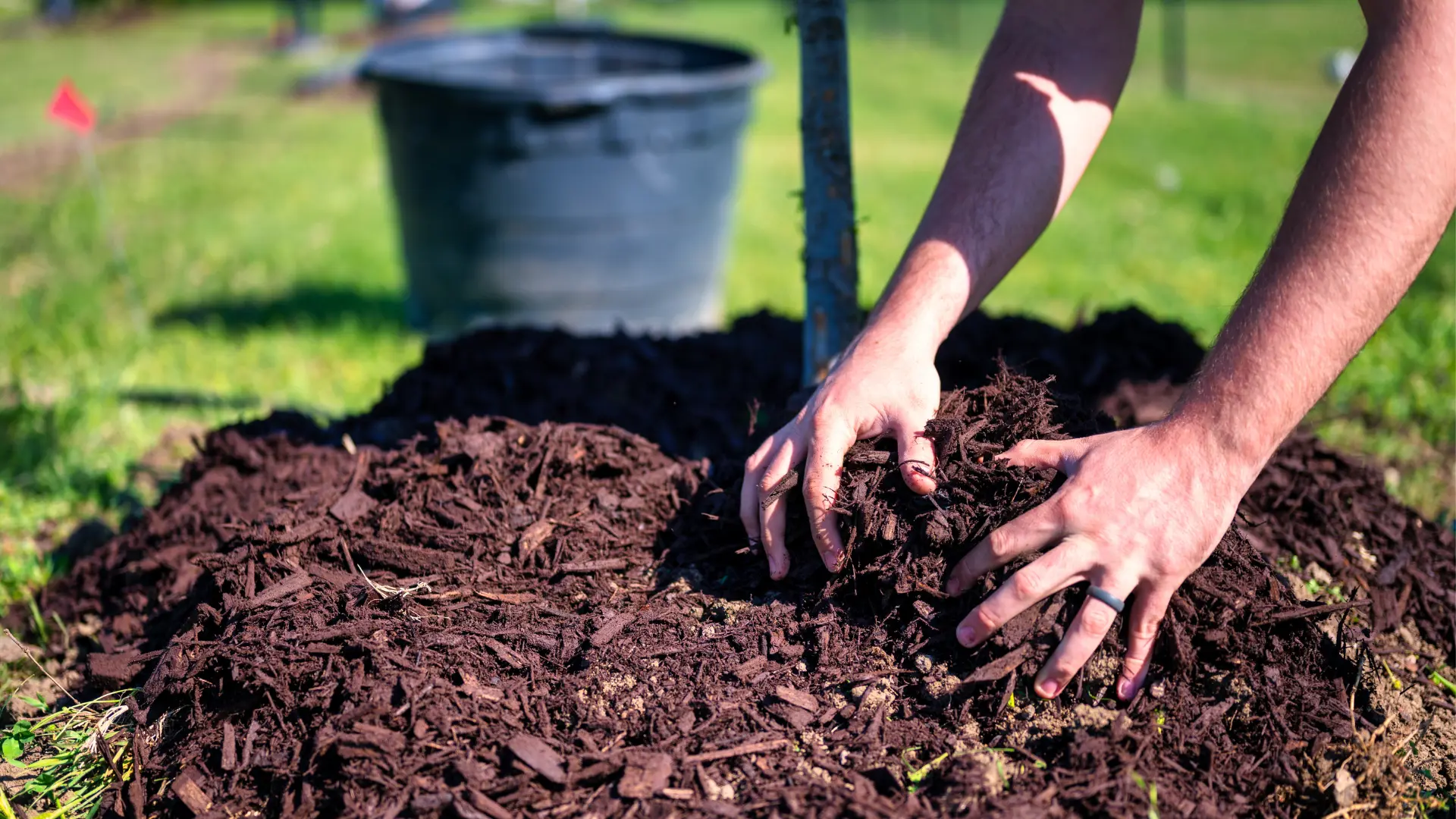
Don't pile mulch against the trunk ("mulch volcano"). Instead:
- Keep mulch a few inches away from the trunk
- Spread it out in a wide ring
- Maintain a consistent layer depth
The goal is to protect roots, not smother the trunk.
Tree mulch depth
- 2–4 inches is common depending on climate and chip size
- Avoid excessively thick layers right up against the base of the tree
Best landscaping mulch for curb appeal
"Landscaping mulch" often means front yard, visible beds, and a clean finish.
Here the best mulch is the one that:
- Looks consistent
- Stays in place
- Doesn't fade too fast
- Is easy to refresh yearly
Best choices for landscaping
1) Black mulch
Best for a modern, high-contrast look (green plants pop). Great for sharp edging and clean lines.
2) Brown mulch
Best for a natural look. Works with most home styles and landscapes.
3) Red mulch
More of a style choice-some people love it, some avoid it. It can look bold and "landscaped," but it's less universal.
4) Cedar mulch
Popular for decorative beds and around homes. Often chosen when smell/appearance is important.
Landscaping tip: keep it simple
Most people get the best look by picking one color and using it consistently across visible beds. Mixed mulch colors can make the yard look chaotic.
Where rubber mulch fits (and where it doesn't)
Rubber mulch is mainly a playground and high-traffic surfacing solution.
Best for:
- Playground areas
- Dog runs
- Zones where you want long-lasting cover and minimal decomposition
Not best for:
- Vegetable gardens
- Tree rings (if you want organic soil health benefits)
- Beds where you want the mulch to improve soil over time
If you're focused on gardening outcomes, organic mulch generally beats rubber mulch.
Matching mulch types to use cases (quick guide)
Here's a practical mapping using common mulch types:
Black mulch
- Best for: decorative landscaping beds, modern looks
- Not ideal for: vegetable gardens (if you prefer untreated/natural)
Brown mulch
- Best for: general landscaping, flower beds, natural look
- Solid "default" choice
Red mulch
- Best for: bold decorative beds
- Style-specific
Cedar mulch
- Best for: decorative beds, around homes, gardeners who like cedar's look/smell
- Often more expensive than generic hardwood
Bark mulch
- Best for: trees, shrubs, beds that need stability
- Nuggets work well visually but can leave gaps if too chunky
Wood chips
- Best for: trees, paths, natural beds, large coverage areas
- Often easiest to get in bulk or through free programs
Rubber mulch
- Best for: playground mulch, long-term surfacing
- Not a soil-improving mulch
Buying decisions: bulk vs bagged (and how to save money)
Once you know the "best" type, the next choice is format.
Bulk mulch
Best when:
- You're covering large areas
- You want cost efficiency
- You're okay with a driveway drop and wheelbarrow work
Bagged mulch
Best when:
- Small projects
- No truck/trailer
- You want quick convenience
- You're timing big-box mulch sales ("5 for $10" type promos)
If you're doing a full yard refresh, bulk is usually the better value.
How MulchMap helps you find the best mulch near you
The hardest part of choosing the best mulch is that supplier listings often don't clearly say what they stock. You'll see "garden center" or "landscape supply," but not:
- Black/brown/red availability
- Cedar vs hardwood
- Wood chips vs bark
- Bulk vs bagged
- Delivery vs pickup
MulchMap is built around those real decision points. You can:
- Browse suppliers by city and state
- Filter by mulch types (black, brown, cedar, wood chips, bark, rubber, etc.)
- Filter by delivery vs pickup
- Compare local options without opening 20 tabs
Final takeaway
The best mulch for gardens is usually organic mulch that supports soil health and moisture retention. But the "best" type depends on where it goes:
- Vegetable gardens: natural, untreated organic mulch (wood chips/bark), consistent depth
- Flower beds: shredded hardwood, brown/black mulch for a finished look
- Trees: wood chips or bark mulch, wide ring, no "mulch volcano"
- Landscaping curb appeal: black/brown/red depending on style, consistency matters
- Playgrounds: rubber mulch or playground wood chips, focus on depth and containment
Once you've picked the right mulch type, the next step is simply finding a supplier that actually carries it.